Sleep Blog 3: Breaking Old Patterns: How to Let Go of Sleep Guilt
Jordanna Campbell | NOV 6, 2024
#sleepguilt
#yoganidra
#healthyhabits
#scienceofsleep
#relaxationtechniques
#sleepbetter
#bettersleep
#whywesleep
#eveningroutine
#bedtimeroutine
#essentialoils
#matthewwalker
#breakingoldpatterns
Breaking Old Patterns: How to Let Go of Sleep Guilt
"I should go to bed… but maybe just one more episode." Sound familiar? Before you know it, you’re five episodes deep, watching the clock tick away, knowing that tomorrow’s regret is inevitable. For many of us, the tug-of-war between sleep and late-night distractions can be a familiar one.
Learning to let go of the guilt around sleep can be surprisingly hard—and, ironically, pretty tiring to work on. In a world that idolises 'the grind,' admitting the need for more rest can feel like an admission of weakness. But as tempting as it may be to power through, too little sleep can turn us into slow-motion versions of ourselves—forgetful, unfocused, and just a bit zombie-like.
Sleeplessness as a Badge of Honour (Or: How I Ended Up in Bad Company)
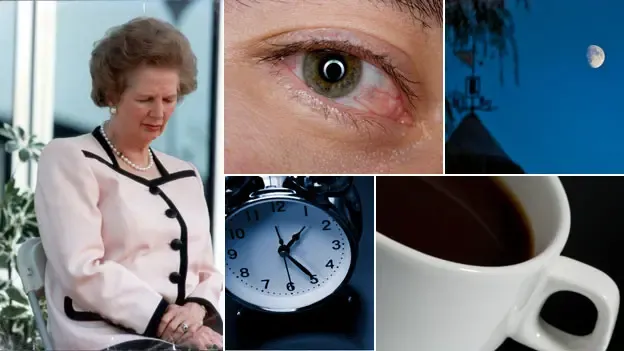
So, why do we treat sleep deprivation like it’s some kind of elite club? Why did I, for years, believe that needing less sleep made me more... well, better? I convinced myself that I was somehow winning at life by surviving on 4-5 hours of sleep a night. That is, until I realised I had unwittingly joined the same club as Margaret Thatcher. 😱😱😱 Yes, the "Iron Lady" who famously boasted about getting by on just four hours of sleep. But if my habits put me in the same camp as leaders who dismiss the importance of rest and well-being, re-evaluation was long overdue.
Yet, there I was, running on fumes, fuelled by caffeine and willpower. Until one day, I noticed that my carefully crafted email for an upcoming yoga class was sent to… my dentist. The signs were all there; it was time to wake up, in every sense.
Why We Sleep
The need for change hit me hard, and reading Why We Sleep by Matthew Walker helped connect the dots. Walker’s research was a real eye-opener (pun intended). My sleep habits weren’t boosting my productivity; they were setting me up for brain fog and burnout. Walker debunks the myth that needing less sleep is some kind of superpower. The truth? Most of us need 7-9 hours to support both physical and mental health. Regularly getting less than that? It can lead to mood swings, health issues, and, well, sending yoga schedules to your dentist.
And if you’re wondering about those folks who do just fine on 4 hours a night—that’s a genetic mutation affecting less than 1% of the population. Unless you’re part of that magical group (or, you know, Thatcher), you probably need more sleep.
Ditching the Guilt
Now, you’d think with all this newfound wisdom, I would have immediately started sleeping like a baby. Nope. My brain had other plans. It kept whispering things like, "You should be doing something productive," or, "Do successful people really go to bed before 9 p.m.?" Well, successful or not, I realised I wasn’t going to make it very far if I kept running on fumes. So, I started giving myself permission to sleep—no more guilt trips, no more pretending I’m some kind of short sleeper superhuman.
But of course, old habits die hard, and my body didn’t always get the memo. That’s where relaxation techniques came in. Yes. I have had to learn how to relax so I could sleep.
Relaxation Techniques for (Finally) Getting Some Sleep
If you’re also struggling to give yourself permission to rest, here are a few things that helped me finally make friends with sleep:
Yoga Nidra: This one’s been a game-changer. It’s the yoga equivalent of hitting the reset button. Just lie down (yes, that’s it), and the practice guides you into a deeply relaxed state that feels like a spa day for your mind. Even a 20-minute session leaves me feeling refreshed. You can find sessions on YouTube or through various apps.
Evening Rituals: Creating a bedtime ritual helped me transition into sleep mode without guilt. It doesn’t have to be elaborate—dim the lights, sip herbal tea, and pretend you’re in a Jane Austen novel (minus the corsets and drama).
Breathing Exercises: Simple, but so effective. Inhale for four counts, exhale for six, and repeat. It’s like giving your brain a hug after a long, chaotic day.
Aromatherapy: Bergamot is my go-to; its calming citrus scent is the perfect mix of fresh and soothing, like a gentle reminder to take a deep breath and let the day's worries melt away. I used to roll my eyes at this stuff, but it turns out there’s something soothing about essential oils that helps me unwind. Who knew?
Final Thoughts (A.K.A. My Permission Slip to Sleep)
Breaking old patterns around sleep isn’t easy, especially when you’ve been conditioned to think that sleeplessness is something to be proud of. But here’s the truth: rest isn’t a luxury, and it definitely isn’t something you need to "earn." It’s a necessity for functioning like a sane person. Letting go of sleep guilt is about giving yourself permission to rest without feeling like you’re failing at life.
So, the next time you feel guilty about getting enough sleep, remember: nobody's handing out awards for being sleep-deprived. And if they were, I’d be too tired to accept mine.
Over to You 😴😴😴😴
What sleep habits have you had to break, and how do you unwind at the end of the day?
Let me know - I’d love to hear your stories (unless you’re part of the 1% who only need 4 hours of sleep, in which case, please share your secrets... or at least confirm that you’re not a robot).